
Solid SDR-35 pipe, never corrugated
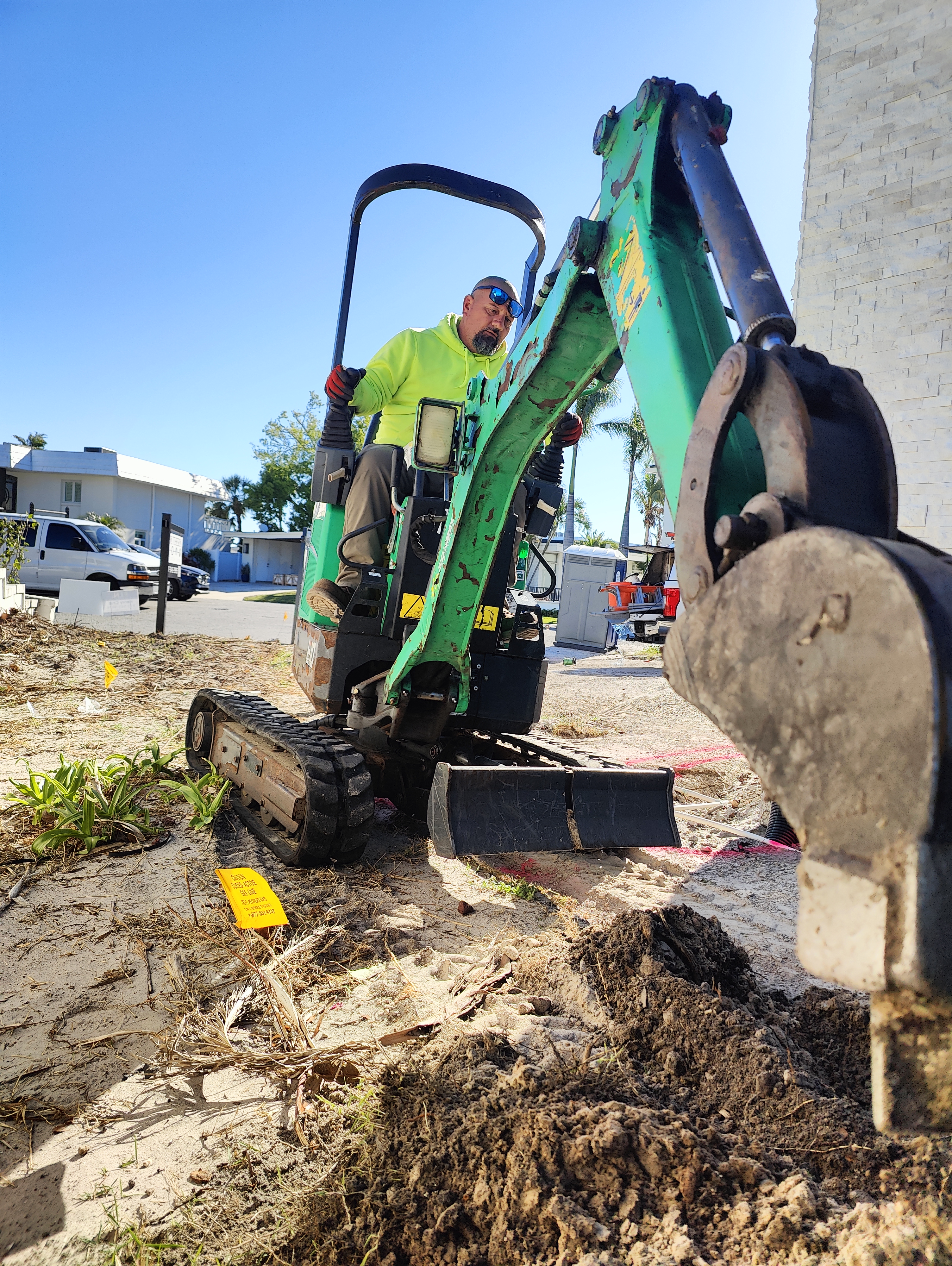
Underground Drainage · Greater Tampa Bay
Underground Drainage That Moves Water Off Your Property
We do not just sell drainage. We sell peace of mind.
Every storm drops hundreds of gallons on your roof and your yard, and all of it has to go somewhere. We bury solid pipe that picks the water up at the downspouts and the low spots and carries it to one controlled exit, well away from the house.
★★★★★ 4.7 on Google 38 reviews
Serving Tampa Bay since 2018 Family owned and operated
Solid SDR-35 pipe Commercial-grade, never big-box
The Runoff Problem
Where All That Water Is Supposed to Go
Tampa Bay sees close to fifty inches of rain a year, and most of it arrives in fast, heavy summer storms. A single inch of rain puts well over a thousand gallons on an average roof, and the downspouts drop all of it in the few feet of ground right beside the house. On a flat Florida lot, it has nowhere to run.
When water has no path out, it sits. It saturates the soil, works toward the slab, and carves erosion lines across the yard with every storm. A surface fix moves the puddle a few feet. An underground system gives the water a way to actually leave, through sealed pipe under the yard to one controlled exit far from the house.
Signs You Need Underground Drainage
Downspouts dumping water right at the foundation
Roof runoff pooling in the same spots after every storm
Water sheeting toward the house instead of away
Yard drains or channel drains that hold water with no outlet
Erosion lines or washout where the water runs hard
A driveway, patio, or pool deck that floods and drains slow
An older drainage line that has clogged or collapsed
How the System Works
How a Buried Drainage System Works
Underground drainage is a network, not a single pipe. Each part has a job, and they all feed one path out. The numbers on the cutaway match the parts below.
A Trufam underground system in cross-section, from the downspout at the house to a basin out by the curb. Numbers match the parts below.
1
Downspout cleanouts
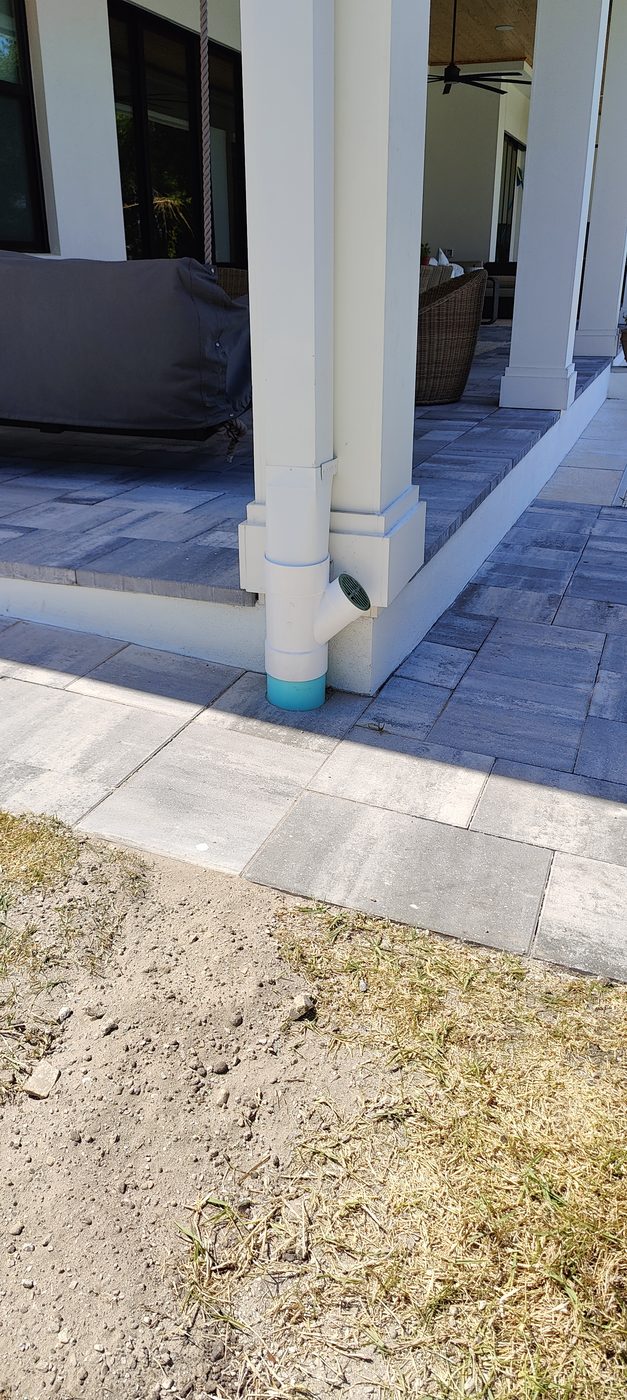
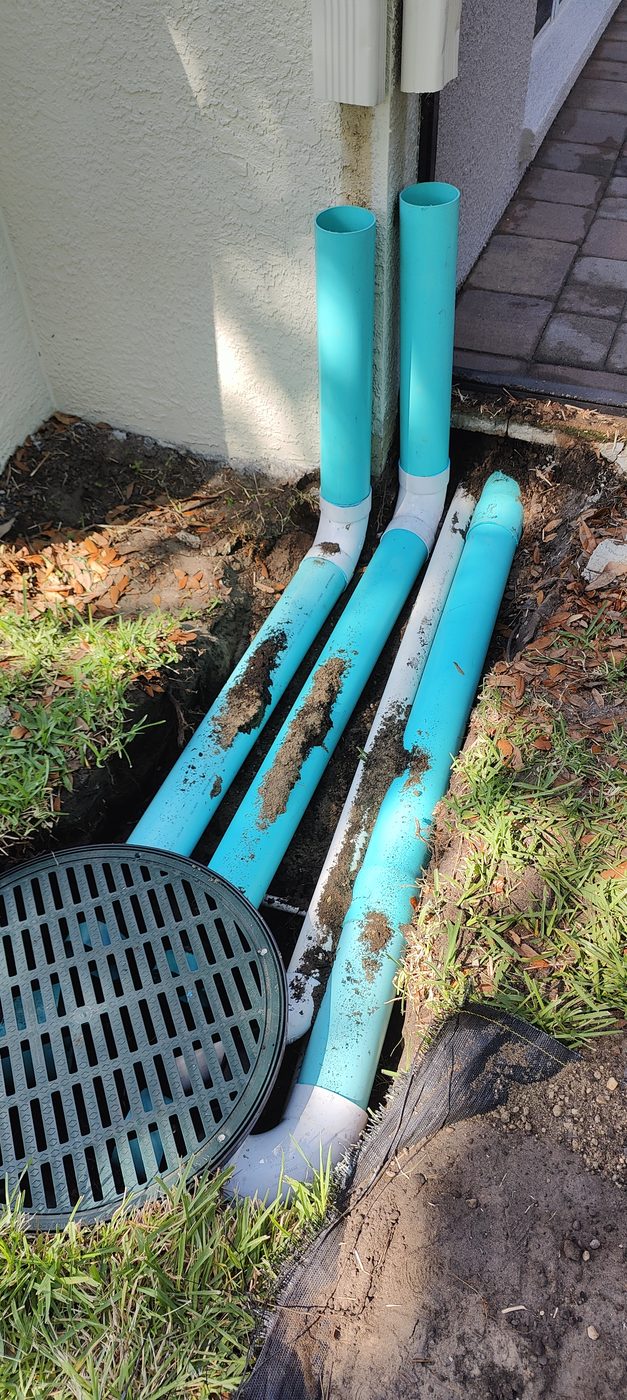
Roof water is the biggest single source, so we get it off the foundation first. Each downspout ties into its own solid line through a metal cleanout that catches debris and gives the line a service point. If the gutters above it are undersized, we handle them in the same project.
2
Inlets where water collects
Grated catch basins and area drains sit flush where water ponds, on the lawn or across hard surfaces, so surface water drops into the system instead of sitting on top. Pool decks and driveways usually call for channel drains tied into the same lines.
3
Solid SDR-35 pipe, set to pitch
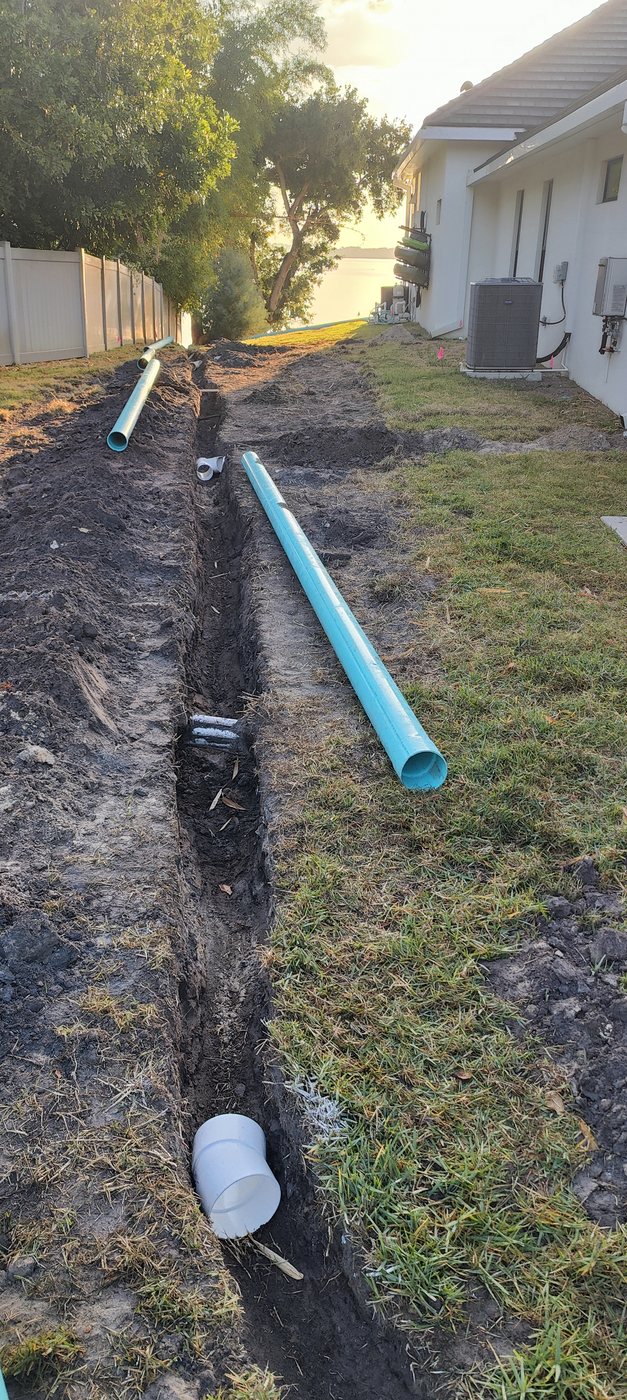
Everything moves through solid SDR-35 PVC in long sections, set on flat trench bottoms with proper fall we check with a level, no bellies where water can sit. Smooth walls flush debris through, and the lines drain dry between storms.
4
Distribution boxes
Where several lines meet, a distribution box collects them in one place, keeps the flow organized underground, and gives the system an access point you can reach later without digging up the yard.
5
A sediment basin
Before the water leaves, a sediment basin traps shingle grit, sand, and dirt in one easy-to-reach spot. You clean a basin instead of hydro jetting the whole system, and the buried pipe stays clear.
6
A basin out by the curb
The line runs to a basin set out by the curb. The water rises and exits out the top of that basin to the street, as fast as the storm delivers it. We never finish a system at a pop-up emitter, which restricts flow and clogs right when you need it open.
Built to Last
Why We Run Solid Pipe, and Build It to Be Serviced
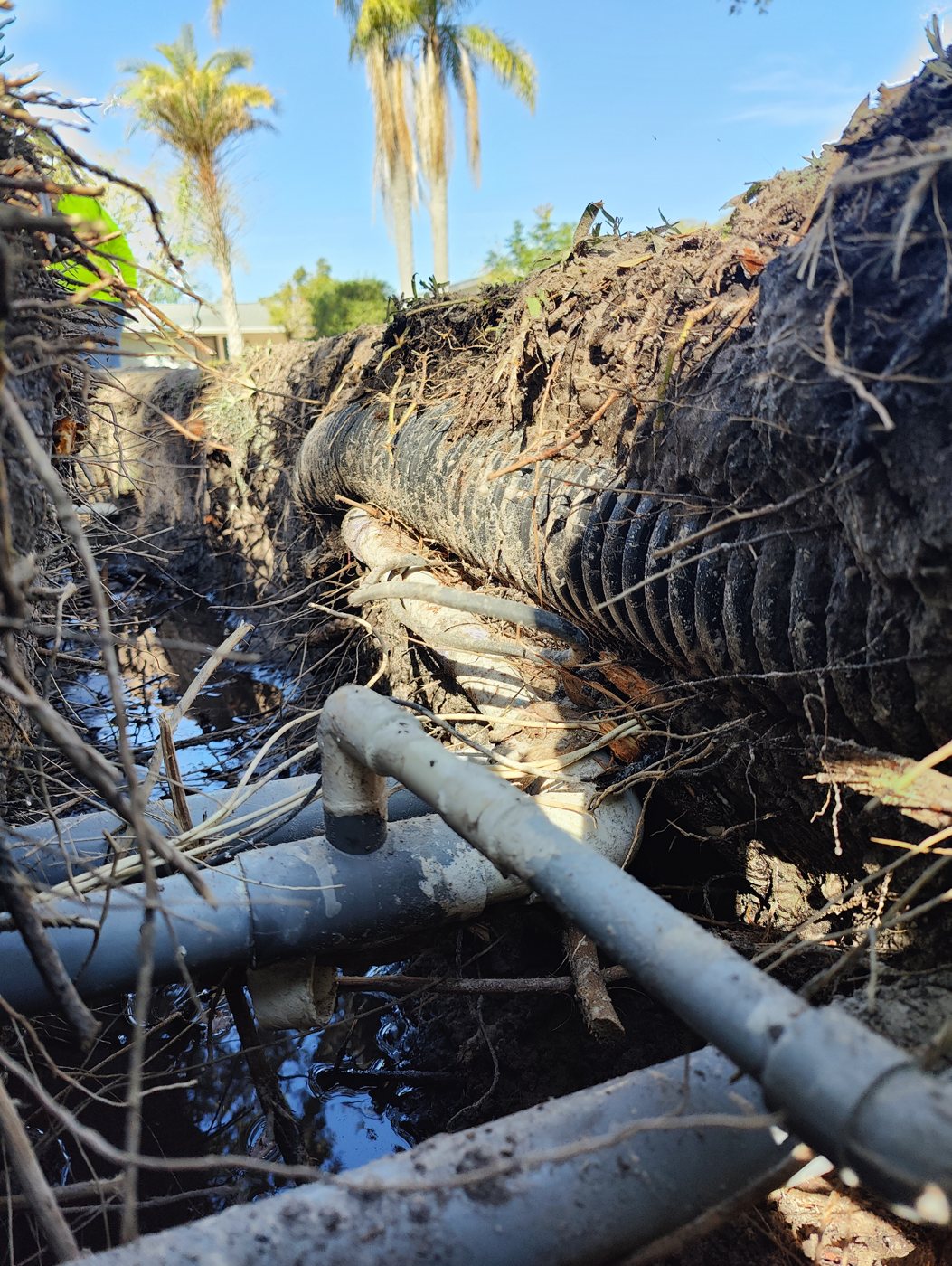
The single biggest difference between drainage that lasts and drainage that fails underground is the pipe. The cheap black corrugated pipe from the big box store has ridged walls that catch sediment, it crushes under a mower or settling soil, and the sections pull apart at the joints. We run solid SDR-35 and build in the access points that keep the whole system working for years.
Solid SDR-35 pipe
Thick-walled PVC with a smooth bore, so debris flushes through and the pipe holds its shape underground for years.
Proper pitch, no bellies
Set on flat trench bottoms with the fall checked by a level, so the line drains dry and nothing sits between storms.
Metal downspout cleanouts
Each downspout gets a metal cleanout that catches debris before the pipe and gives the line a service point at the wall.
Catch and sediment basins
Grit and sand get trapped in basins you can reach and clean, instead of packing into the buried pipe.
A discharge for the storm
The system ends at a basin sized to release a full storm as fast as it arrives, out by the curb and away from the house.
Real Work in Tampa Bay
Why Trufam
Designed Around How Your Water Moves
A lower upfront price can look like the better deal, but a shallow trench of corrugated pipe with no plan for the water tends to clog, sag, and flood again. We read the property first, then build one system sized to it.
The Quick Fix
Cheaper now, paid for twice
- Corrugated pipe that catches sediment and crushes
- No real fall, so water sits in the line between storms
- No cleanouts or basins, so it cannot be serviced
- A discharge that clogs right when a storm needs it open
The Trufam Build
One system, designed to last
- Solid SDR-35 pipe in long sections, sealed at the joints
- Proper pitch set with a level, so the line drains dry
- Cleanouts and basins that keep it serviceable for life
- A curb-side basin sized to release a full storm
What Goes Into the Project
What Shapes the Scope and the Price
No two systems are the same job. The price follows how much water the property takes on, how many points we collect it from, and how far it has to travel to leave safely. At the walkthrough we lay out exactly what we would build and why each part belongs, before any number is set. Most homeowners who call us have already paid for the cheap route once.
- Total length and depth of the pipe runs
- How many downspouts and inlets we tie in
- Distribution boxes and sediment basins the layout needs
- How the lot falls and the distance to the curb discharge
- Hard-surface drains for driveways, patios, or pool decks
- Sod or stone restoration when the work is done
Know the Difference
Underground Drainage, French Drains, or Both?
If you do not work in drainage every day, it is natural to call all of it a French drain. Each one handles a different kind of water, and many Tampa Bay properties need more than one tied into the same path out.
Underground drainage
Sealed solid pipe that picks up roof water and surface inlets and carries everything to one controlled exit.
Best for: downspout runoff and moving water off the lot.
French drain
Perforated pipe in a fabric-wrapped granite trench that pulls out water already soaked into the ground.
Best for: saturated soil and high groundwater. See French drains.
Yard drainage
The whole plan for a wet lawn, combining inlets, French drains, and solid pipe into one system.
Best for: a yard that ponds all over. See yard drainage.
When the trouble is water sitting against the slab or working into the walls, that is a foundation drain with waterproofing, and we build those too. A walkthrough tells us which system your property actually needs.
Built for Tampa Bay
Why Underground Drainage Matters on Florida Lots
Florida yards sit on sandy topsoil over clay and a high water table, surrounded by roofs, driveways, and pool decks that shed water fast. The sand drinks the first storm, the clay stops it, and on a flat lot the rest collects on top with nowhere to run. A buried system is what gives all of that water a way off the property. We design and install underground drainage across Palm Harbor, Clearwater, Dunedin, Safety Harbor, St. Petersburg, Seminole, Tampa, Fish Hawk, Bradenton, Lakewood Ranch, Sarasota, and the surrounding communities. See every area we cover on our service areas page.
Common Questions
Underground Drainage FAQs
It depends on how much pipe the system needs, how many downspouts and inlets we tie in, and how far the water has to travel to a safe discharge. Most full systems start around five thousand dollars and scale up with the size of the property and the scope. We are not the cheapest option, because solid SDR-35 pipe, real basins, and proper grade cost more than a trench and corrugated pipe, and they are why the system keeps working. The exact number gets set at the walkthrough, after we have read the water on your property.
Underground drainage is sealed solid pipe that collects roof water and surface water and carries it off the property. A French drain is perforated pipe in a granite and fabric trench that pulls water already soaked into the ground. Many properties need both, tied into the same discharge. We figure out which your lot needs at the walkthrough, and we will tell you straight.
Corrugated pipe has ridged walls that catch sediment, it crushes under a mower or settling soil, and the sections separate at the joints. Once it clogs it cannot be cleaned, only dug up. Solid SDR-35 PVC holds its shape under a yard, its smooth bore flushes debris through, and it stays serviceable. When we replace a failed line, corrugated pipe is almost always what comes out of the ground.
Every system ends at a controlled exit built for the lot. A common one in Tampa Bay is a basin set out by the curb: the buried line feeds it, the water rises, and it exits out the top of the basin to the street, the same place the rain is meant to end up. On lots with a low spot or a pond that works, we route it there instead. We never finish a system at a pop-up emitter, which restricts flow and clogs right when a storm needs it open.
They should. Roof water is the biggest single source, and downspouts dumping at the foundation are the most common cause of water problems we see. Each downspout ties into its own solid line through a metal cleanout that catches debris and gives the line a service point. If the gutters themselves are undersized or pulling away, we handle them in the same project.
No. The work runs in narrow trenches, not full-yard excavation. We cut and set aside the sod, dig the runs, build the system, and lay the sod back over the top. The excavated dirt is hauled away instead of dumped on the lawn. A few weeks after the install, most homeowners cannot point to where the trenches were.
Yes, and it is a lot of what we do. If the old line is corrugated and packed with roots or sediment, the fix is to replace it with solid pipe and add the cleanouts and basins that keep it clear. If the system is solid pipe that is simply clogged, hydro jetting can often restore it. We tell you honestly which one your situation calls for.
A little, and the design makes it easy. The cleanouts, catch basins, and sediment basin trap debris in spots you can reach, so the buried pipe stays clear. Emptying those now and then and checking the discharge after big storms covers most of it. Our Peace of Mind Membership handles it on a schedule if you would rather never think about your drainage again.
Move the Water Off Your Property
Get a System Designed for Your Lot
We walk the property, read where the water comes from and where it can go, and design a buried system built to carry it off for years. No pressure, and we never sell work you do not need.
Request an Estimate