
Seamless Gutters That Catch the Rain and Carry It Away
Caught at the roof, carried past the walls, and sent away from the foundation.
Most gutter crews stop once the gutter is on the wall. We are a drainage company, so we size the gutters to your roof, set the pitch with a level, and tie the downspouts into a real drain line that moves the water away from the house.
Most Gutter Companies Stop at the Gutter
A gutter that empties at the base of the wall only moves the problem a few feet. Roof water pooling against the foundation is the most common cause of foundation moisture we find. We hang the gutters right, then carry the downspouts into underground drainage so the water actually leaves the property.
One crew handles the whole water path, from the roof to the discharge.
What Overflowing Gutters Do to a Home
When gutters are too small, out of pitch, or worn at the seams, the water pours over the edge in a hard rain. It runs down the walls, sheets off the roofline, and lands right against the house. In Tampa Bay, where a summer storm can drop two inches in an hour, an undersized gutter gives up exactly when you need it.
The damage builds quietly. The fascia and soffit stay wet and begin to rot. Paint stains and streaks. Mulch and soil wash out of the beds. Water collects against the slab and works toward the foundation. A gutter problem becomes a wood problem, then a foundation problem, if it sits long enough.
Rotting fascia and soffit
Stained, streaked walls
Washed-out beds and erosion
Water pooling at the foundation
The Right Gutter for Your Roof and Your Home
A gutter only works when it can carry what the roof sheds. We install several profiles and sizes and match them to your roof, your fascia, and the look of the home.
6-Inch K-Style
Our standard seamless profile in .027 aluminum. It holds more water than the old five-inch gutters and fits the majority of Tampa Bay roofs.
7-Inch K-Style
Heavier .032 aluminum in a larger profile for big roofs, steep pitches, and metal or tile. More capacity for the roofs that shed the most water.
Half-Round
A classic rounded profile that suits older and architectural homes. Smooth inside, easy flowing, and a cleaner look on the right house.
Copper
Copper gutters and downspouts for select homes. They age into a rich patina and last for decades, a premium choice where the home calls for it.
Custom Box Gutters
Large square gutters fabricated to the roofline for high-flow runs and bigger homes. Built to carry serious volume off the roof.
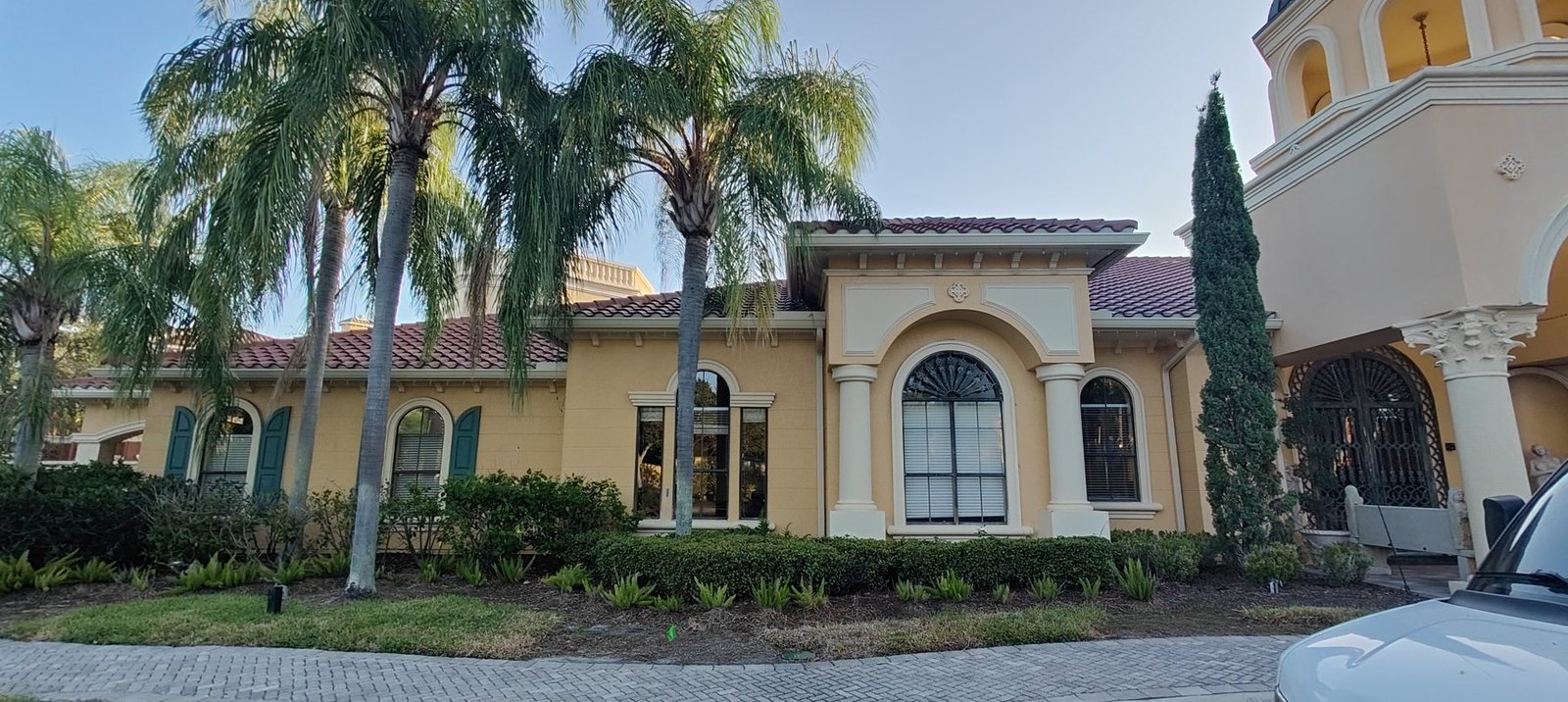
Why Metal and Tile Roofs Get 7-Inch Gutters
A slick metal or tile roof sheds rain faster and throws it farther past the edge than a shingle roof does. A standard gutter cannot catch all of it, so the water overshoots and runs down the wall. On metal and tile we run 7-inch gutters as the minimum, with the outlets and downspouts sized to match.
- Catches the fast runoff a shingle-sized gutter misses
- A wider mouth set right at the roof edge
- Bigger outlets so it drains as fast as it fills
What Makes a Gutter Last, Built Into Every Run
A gutter is only as good as how it is hung and sealed. We hand-cut and seal every corner, hang the run on hidden hangers, and tie the downspouts into real drainage. The parts you never see are what keep it on the wall and watertight through years of Florida storms. Here is the path the water takes, from the roof to the discharge.
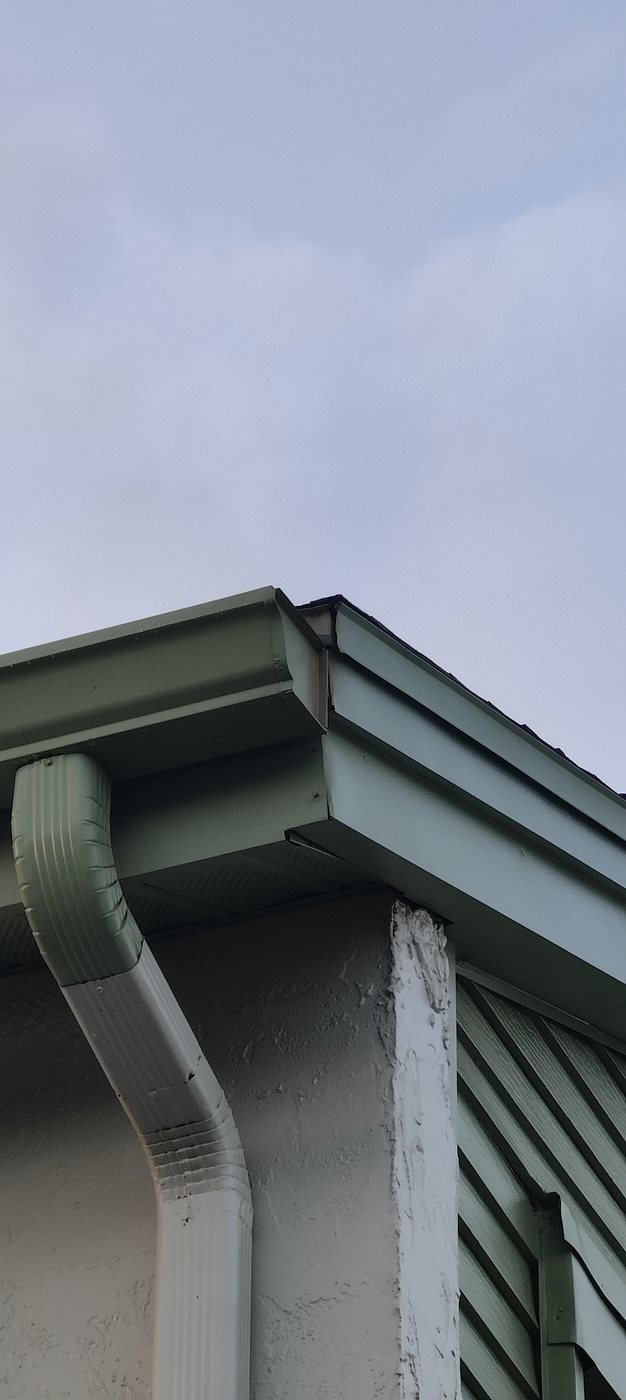
Heavier-gauge aluminum
.027 on six-inch and .032 on seven-inch, so the run holds its shape and does not sag.
Hidden hangers, spaced for the load
Heavy hangers screwed to the fascia and set close, so a full gutter in a downpour stays put.
Wedge on angled fascia
Where the fascia is tilted, a wedge behind the gutter holds the pitch so it sits and drains true.
Real outlet and new downspout
A properly sized outlet feeds a new downspout on every job, so the water leaves the gutter fast.
Metal cleanout with a screen
At the base, a raised metal cleanout with a screen catches debris and gives the line an access point.
Water out to a discharge
The buried line carries the roof water to a basin where it surfaces and flows away from the home.
You are paying for heavier metal, hand-cut corners, and a run hung to hold its water. That is what keeps it working long after a cheaper job has pulled off the wall.
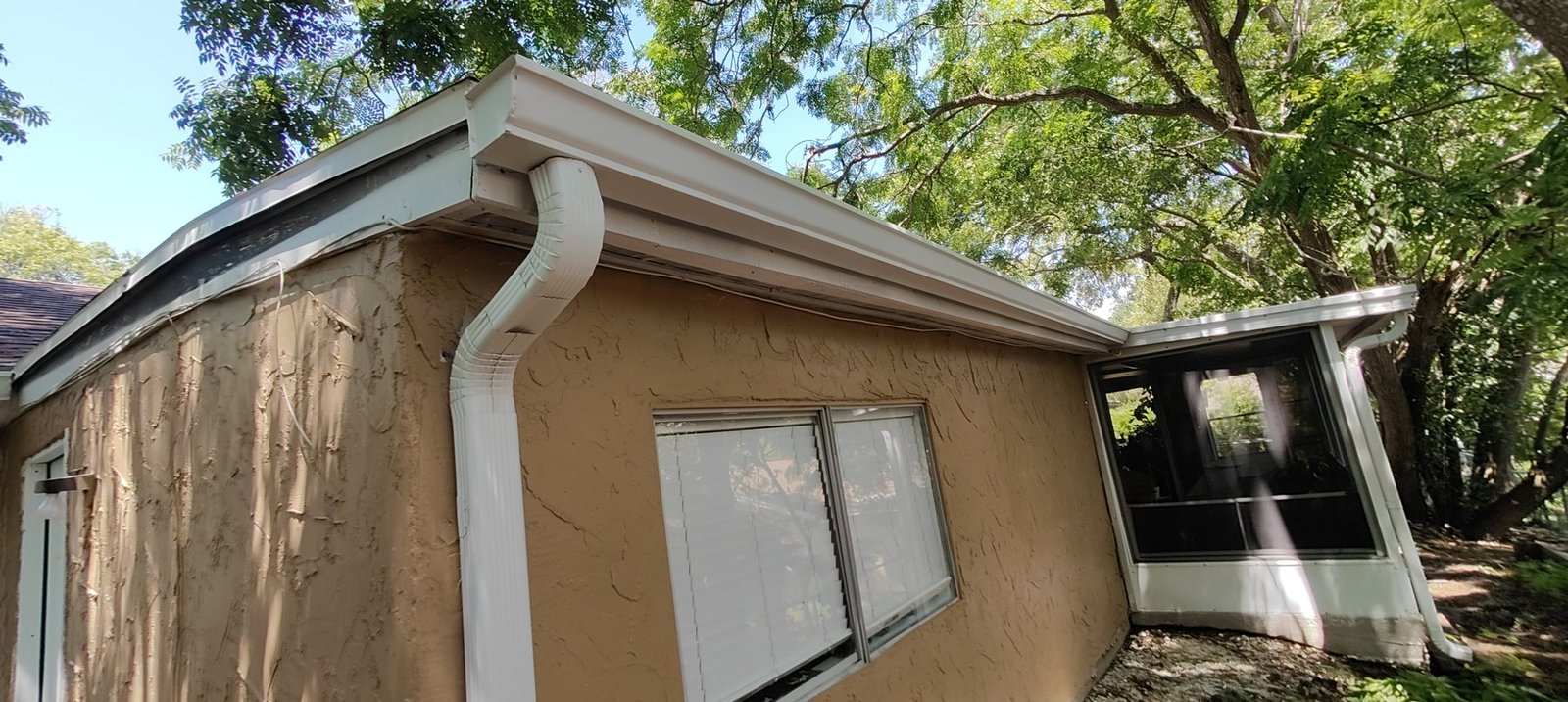
We Send the Downspouts Somewhere, Not Just Down
A downspout that empties at the base of the wall pours hundreds of gallons right where you least want it. Because drainage is what we do, we pull the downspouts off the foundation and tie them into a buried underground drainage line that carries the roof water out to a real discharge. When water is already working at the wall, we pair the gutters with foundation drains and waterproofing.
- Downspouts tied into solid underground pipe
- Roof water carried to a discharge away from the house
- No more water dumping against the foundation
- Gutters and drainage handled by one crew
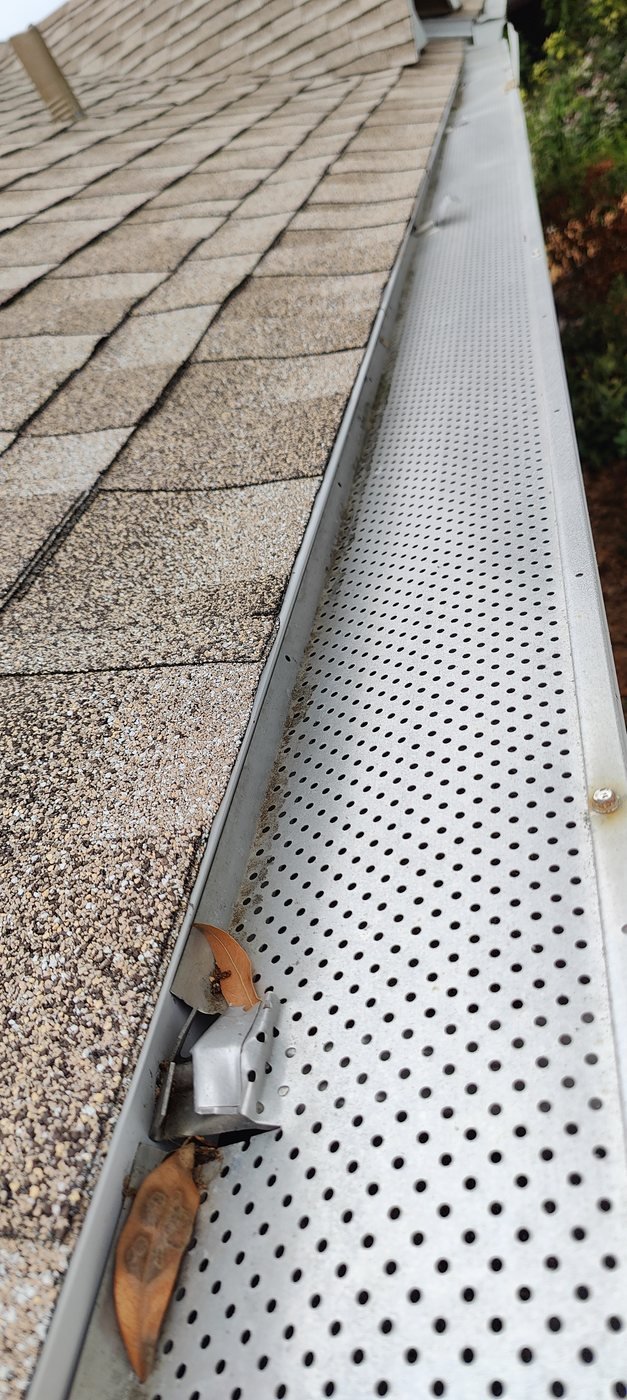
Thinking About Gutter Guards?
The right guard keeps pine needles, leaves, and shingle grit out so the gutters keep flowing. The wrong one clogs with pollen and algae and causes the problem it was meant to solve. We match the guard to the debris around your home.
See our gutter guards options →Seamless Gutters on Tampa Bay Homes
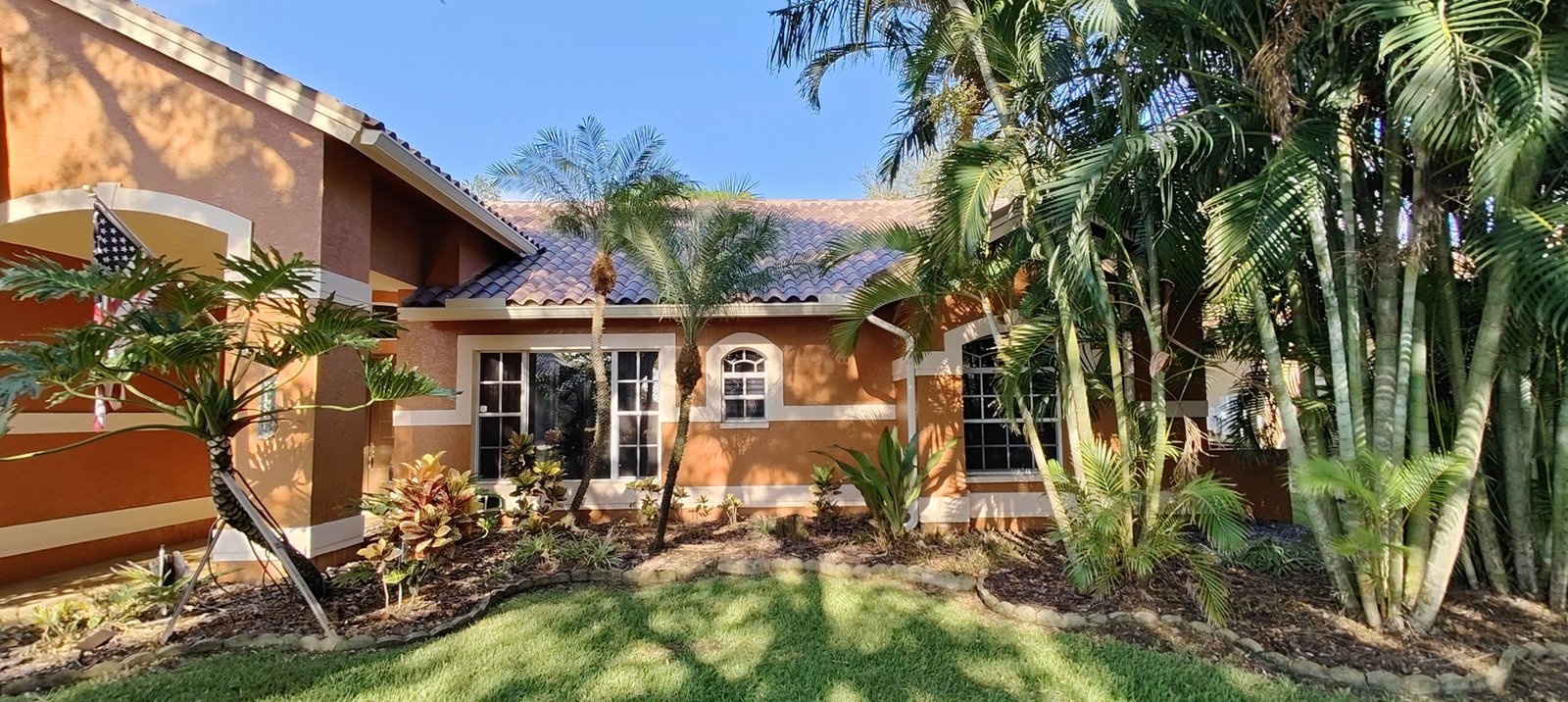
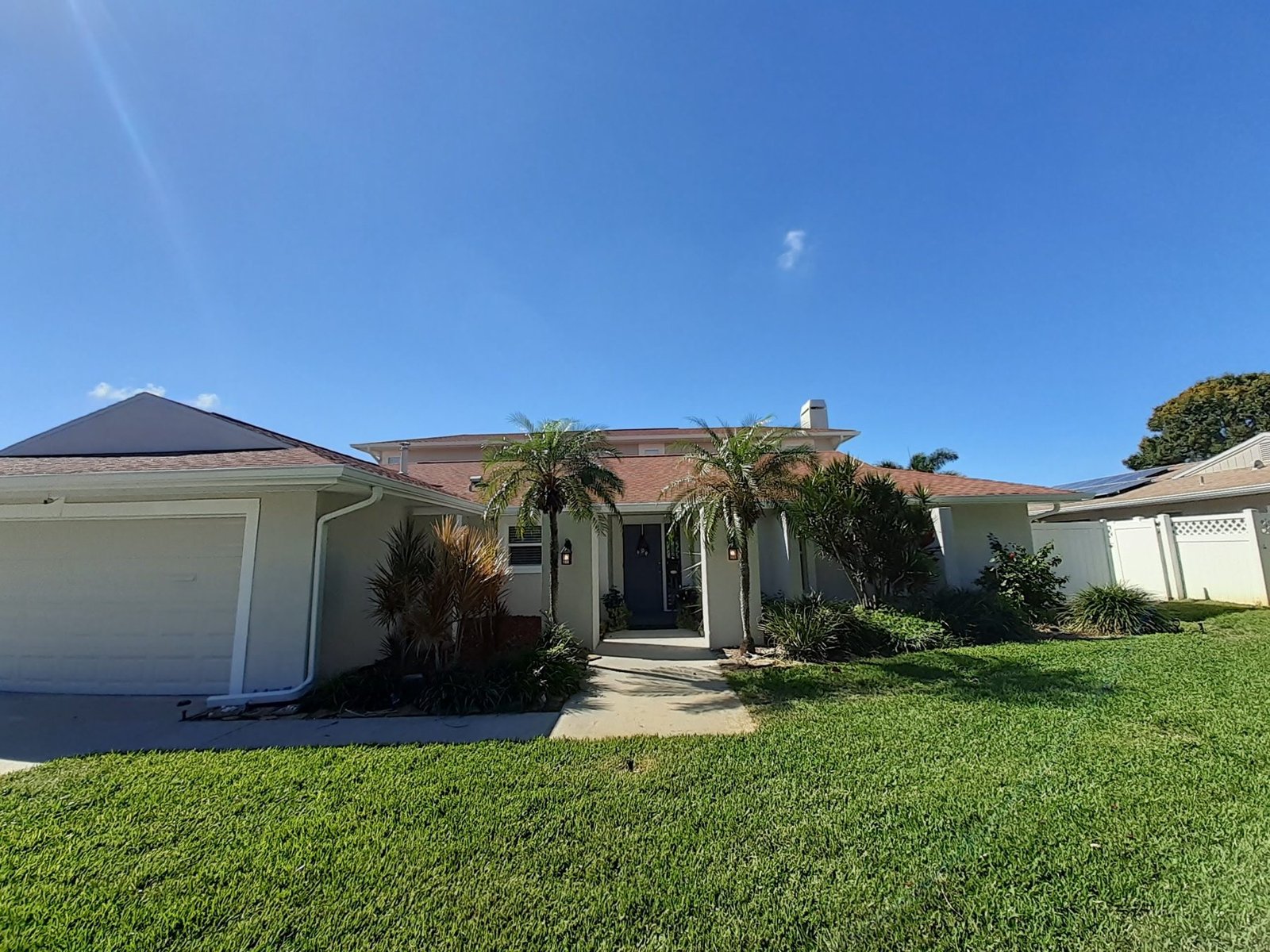
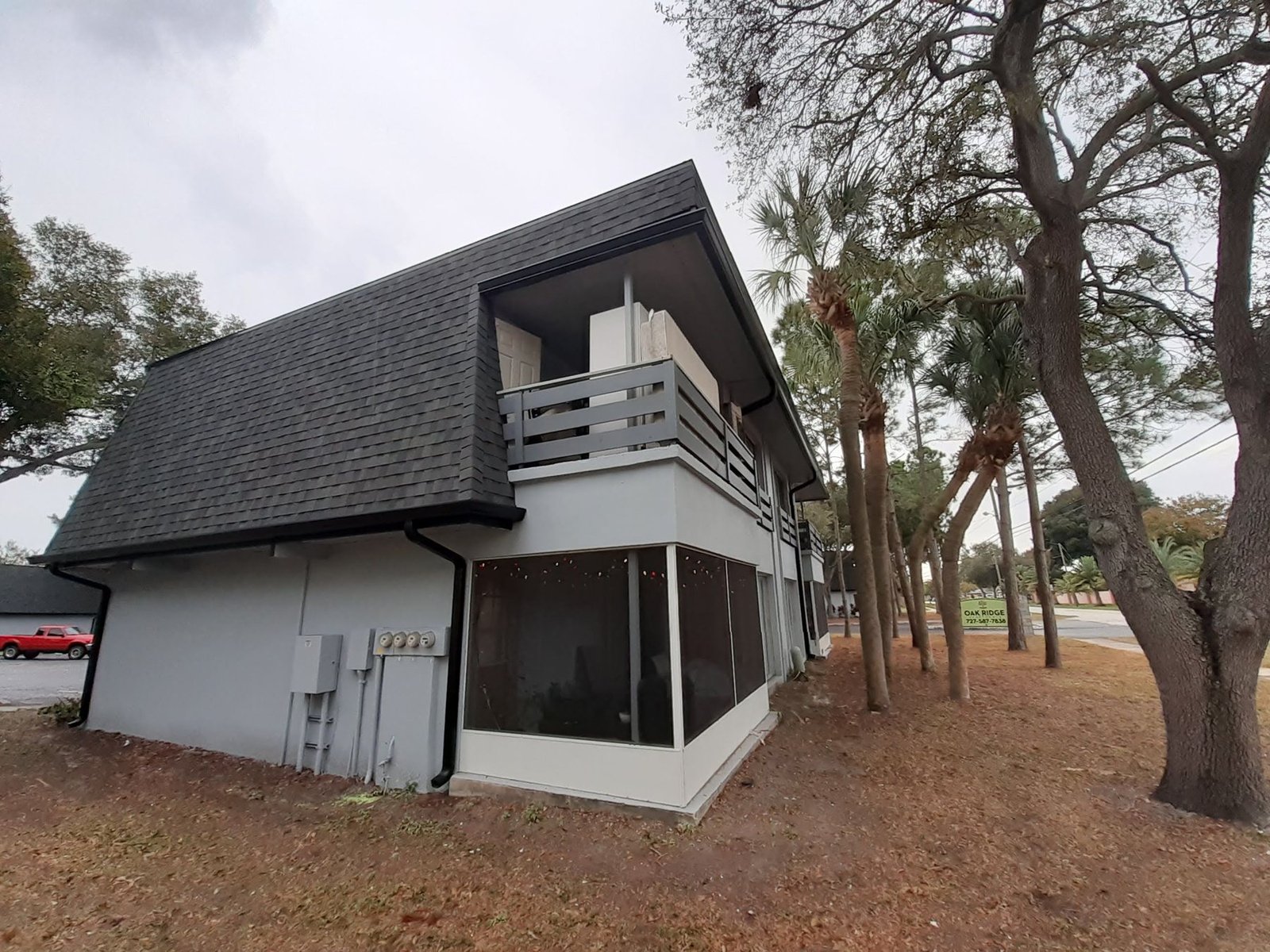
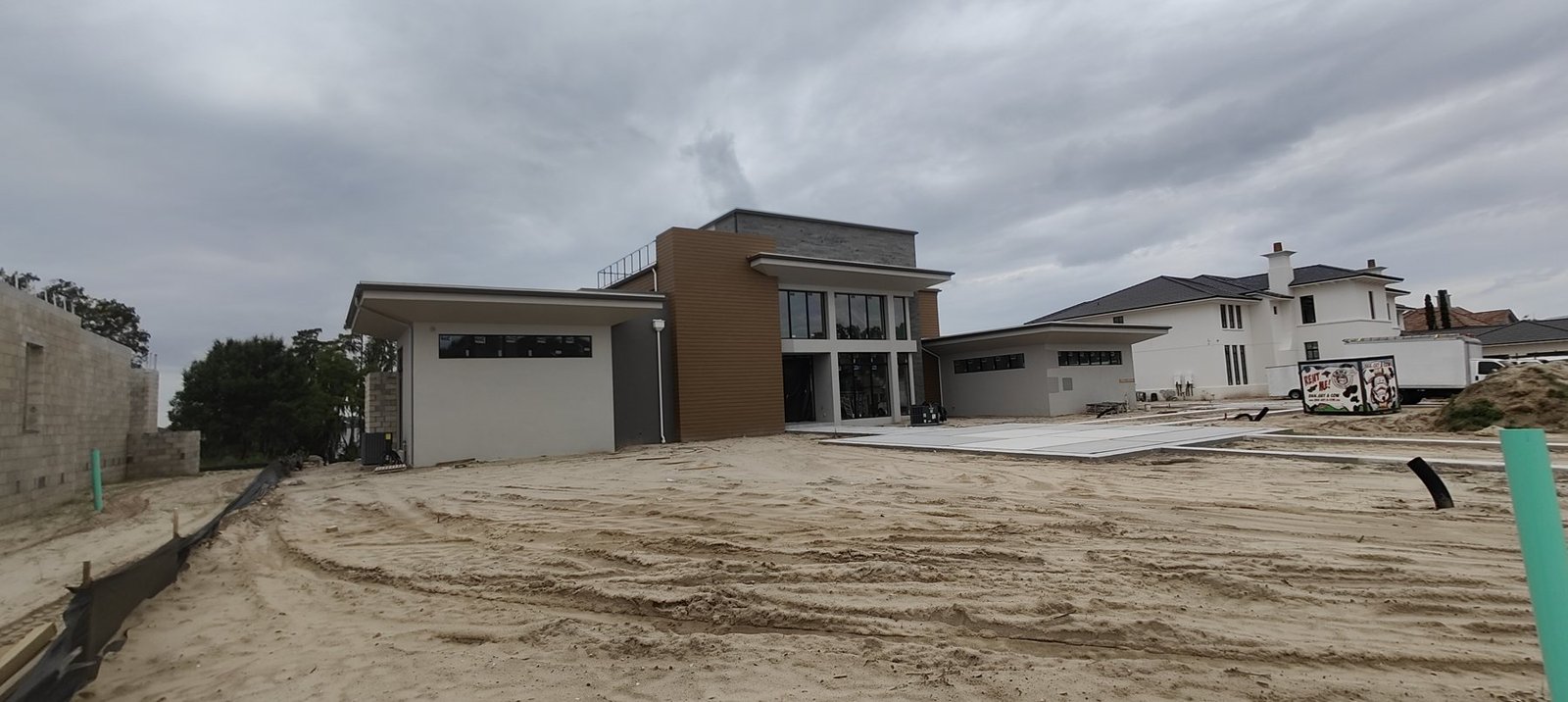
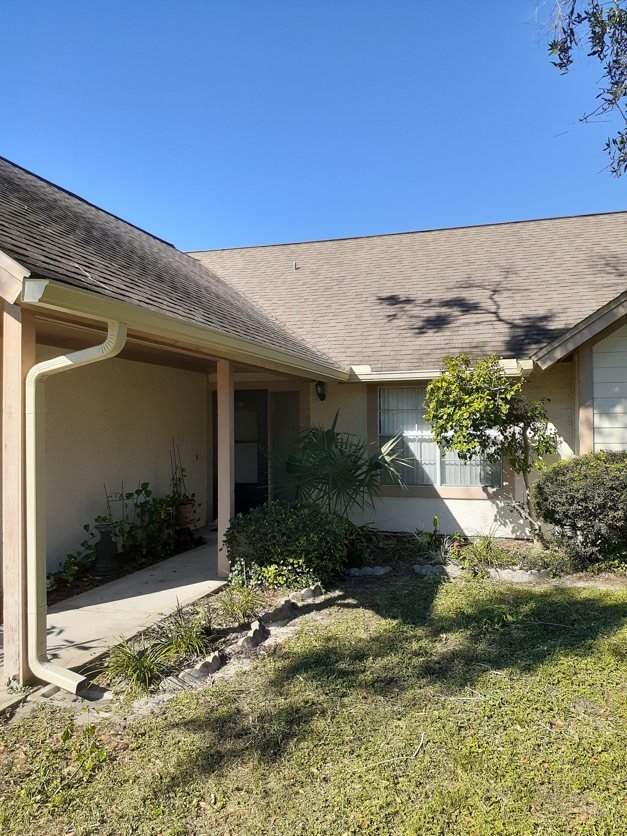
Every photo here is a real Trufam install, never stock and never a rendering.
What Shapes a Gutter Estimate
No two roofs are the same, so we price each job after we measure it. The number follows the size of the roof, the profile you choose, and how the water has to leave the house. We set it at the walkthrough, before any work starts.
- Total length of the roofline and the number of stories
- The profile and metal, with copper and custom box costing more
- The gauge of the aluminum and the hangers the run needs
- How many downspouts and where the water discharges
- Wedges and extra work where the fascia is tilted or hard to reach
- Tying the downspouts into underground drainage
We are not the cheapest gutter company in Tampa Bay. You are paying for heavier aluminum, hand-cut corners, and downspouts carried to a real discharge, and that is what protects the roofline, the walls, and the foundation.
We are not the cheapest gutter company in Tampa Bay, and that is on purpose.
We size the gutters to your roof, hang them to hold their water, and carry the downspouts to a real discharge. Every run is built with commercial-grade aluminum so it keeps working through heavy rain and back-to-back storms. We never sell work you do not need. If a repair solves it, that is what we will tell you.
Request an EstimateFrom Walkthrough to the First Storm
Every gutter job follows the same simple path. No surprises, no rushed install, no shortcuts.
Walkthrough and Measure
We measure the roofline, check the fascia and the roof type, and look at where the water needs to go.
Size and Quote
We size the profile, outlets, and downspouts to your roof and set a clear price before any work starts.
Seamless Install
We roll each gutter to length on site, hang it to the proper pitch, hand-cut the corners, and seal it tight.
Tie It In and Walk It
We tie the downspouts into the drainage, check the flow, and show you how it all runs before we leave.